Information
Catalogings play an important role in keeping information organized, accessible, and easy to understand. Whether someone manages a library, an online store, a research collection, or a business database, arranging information properly saves time and reduces confusion. Without a clear system, even valuable information can become difficult to locate.
As the amount of digital and physical information continues to grow, the need for organized records has become more important. Catalogings provide a practical way to describe, classify, and arrange different types of materials so people can find what they need without unnecessary effort.
What Are Catalogings?
Catalogings refer to the process of creating organized records for different items, documents, products, or resources. These records usually contain important details such as names, descriptions, categories, dates, authors, and identification numbers.
For example, a library uses cataloging to organize books according to their titles, authors, subjects, and publication details. Similarly, an online store uses product catalogings to arrange items by category, brand, price, and other useful features.
The main purpose is to make information easier to manage and retrieve. Instead of – through hundreds or thousands of unorganized entries, users can follow a structured system to find specific information.
Why Are Catalogings Important?
A well-organized collection is useful only when people can find what they are looking for. Catalogings help solve this problem by creating a consistent structure for storing and presenting information.
Here are some important reasons why they matter:
Easier Information Access
When records are arranged properly, users can locate specific items more quickly. Clear titles, descriptions, and categories reduce the time spent searching through large collections.
Better Record Management
Organizations often handle thousands of documents, products, and digital resources. A consistent cataloging system helps employees maintain accurate records and avoid unnecessary duplication.
Improved User Experience
People generally prefer systems that are simple to understand. When information is arranged logically, visitors can explore available resources without feeling overwhelmed.
Reduced Errors
Proper descriptions and identification details make it easier to distinguish between similar items. This is particularly useful in libraries, educational institutions, warehouses, and online marketplaces.
Common Types of Catalogings
Catalogings can be used in different industries, depending on the type of information being managed. Some common examples include:
Library Catalogings
Libraries use organized records to manage books, magazines, journals, newspapers, and other educational materials. Each record provides information that helps readers identify and locate a particular resource.
Product Catalogings
Businesses use product catalogs to display their available items. These records may include product names, specifications, prices, images, and availability. A properly arranged catalog makes shopping easier for customers.
Digital Catalogings
Digital collections include electronic books, photographs, videos, research papers, and other online resources. Cataloging these materials allows users to search through large collections without manually opening every file.
Archival Catalogings
Archives preserve historical documents, photographs, letters, and official records. Detailed cataloging helps researchers understand what a collection contains and where particular materials can be found.
How Does the Cataloging Process Work?
Creating an effective catalog requires more than simply listing items. Each record needs accurate information and a consistent format.
The process generally involves several steps.
Identify the Materials
Start by identifying the items that need to be organized. These could be books, products, documents, photographs, or digital files. Understanding the collection helps determine which details should be recorded.
Collect Important Information
Gather relevant details about each item. Depending on the collection, this may include its title, creator, publication date, category, description, and identification number.
Choose Suitable Categories
Arrange similar items into meaningful groups. For example, an online bookstore might separate its products into fiction, history, science, education, and children’s literature.
Create Consistent Records
Use the same format for every entry. Consistency makes records easier to read, compare, update, and maintain over time.
Review and Update Information
Check the records regularly to correct missing details, remove outdated information, and add new materials. Regular maintenance keeps the catalog useful and reliable.
The Role of Technology in Modern Catalogings
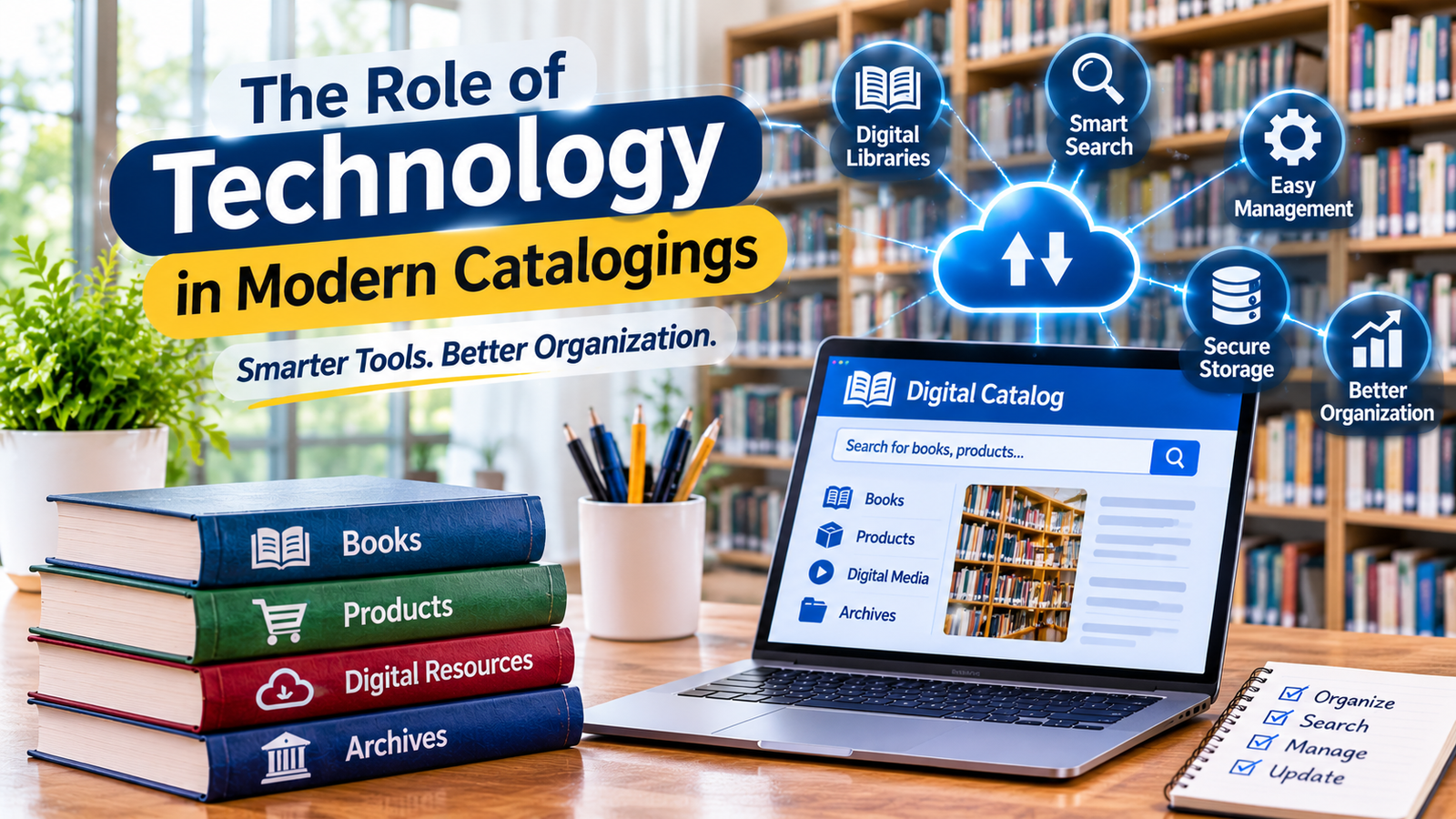
Technology has changed the way organizations create and maintain catalogs. In the past, many records were written in physical registers or maintained through paper-based systems. Today, specialized software and digital databases make the process faster and more convenient.
For example, library management software allows staff to search for books, track borrowed materials, and update records from a central system. E-commerce platforms provide tools for managing product information, categories, stock levels, and descriptions.
Search functions also make digital catalogs more useful. Instead of browsing every category, users can enter a title, keyword, author, or product name to find relevant results.
However, technology alone cannot guarantee accurate information. People still need to review descriptions, select appropriate categories, and correct mistakes. A useful digital catalog depends on both reliable software and careful record management.
Common Challenges in Cataloging
Although cataloging offers several advantages, maintaining an organized system can sometimes be challenging.
One common problem is incomplete information. If important details are missing, users may struggle to identify the correct item.
Another challenge is inconsistent naming. Different employees may describe similar materials using different terms, making searches less effective.
Duplicate records can also create confusion, especially when organizations manage large collections. Regular reviews and clear guidelines help reduce these problems.
Finally, outdated information can affect the usefulness of a catalog. Businesses and institutions should establish a routine for checking their records and making necessary changes.
Best Practices for Effective Catalogings
A successful cataloging system should be simple, accurate, and easy to maintain. The following practices can help organizations improve their record management:
- Use clear and descriptive titles for every entry.
- Create categories that reflect how users search for information.
- Follow consistent naming and formatting rules.
- Avoid unnecessary details that make records difficult to understand.
- Check for duplicate or incomplete entries.
- Update information whenever an item changes.
- Choose suitable digital tools for managing large collections.
- Train staff members to follow the same cataloging guidelines.
- These practices help create a system that remains useful as the collection grows.
Final Thoughts
Catalogings are an essential part of managing information in an organized and practical way. From libraries and educational institutions to online businesses and digital archives, they help people identify, locate, and manage different resources.A reliable catalog does not need to be complicated. Clear descriptions, meaningful categories, accurate records, and regular updates can make a significant difference. By following consistent methods and using suitable tools, organizations can build collections that are easier to maintain and more convenient for everyone who uses them.